
Global Mental Health: Bridging Care Gaps Worldwide
The mental health crisis knows no borders. While the conversation around psychological well-being has gained momentum in recent years, the reality is that billions of people worldwide lack access to basic mental health services. This disparity creates a pressing need for practitioners, policymakers, and advocates to understand global mental health as both a clinical discipline and a social justice imperative. Examining mental health through an international lens reveals systemic inequities, cultural complexities, and opportunities for innovative solutions that can transform how we deliver care across diverse populations.
Understanding the Scope of Global Mental Health
Global mental health represents more than just the study of mental disorders across different countries. It encompasses the comprehensive efforts to improve mental health outcomes for all people, particularly those in underserved and resource-limited settings. The World Health Organization’s mental health initiatives highlight that nearly one billion people live with a mental disorder, yet a significant treatment gap persists in low- and middle-income countries.

The burden of neuropsychiatric disorders affects every region differently. According to the American Psychiatric Association’s global mental health overview, depression and anxiety disorders alone account for hundreds of billions in lost productivity annually. These conditions don't discriminate based on geography, but access to quality care certainly does.
The Treatment Gap Challenge
The treatment gap represents one of the most critical issues facing global mental health today. This gap refers to the difference between the number of people who need mental health services and those who actually receive them.
| Region | Treatment Gap | Primary Barriers |
|---|---|---|
| High-income countries | 35-50% | Stigma, cost, workforce shortages |
| Upper-middle-income countries | 60-75% | Limited infrastructure, trained professionals |
| Low-income countries | 76-85% | Severe resource constraints, cultural factors |
These statistics reveal a harsh reality: the majority of individuals with mental health conditions worldwide receive no treatment whatsoever. The gap widens further when considering the quality of available services, not just their existence.
Cultural Competence in Mental Health Delivery
Delivering effective mental health care across cultures requires more than translating diagnostic manuals or replicating Western treatment models. Cultural competence involves understanding how different communities conceptualize mental health, express distress, and seek healing.
Many Latin American communities, for instance, integrate spiritual and familial dimensions into their understanding of psychological well-being. A practitioner working with these populations must recognize that mental health concerns may be expressed through physical complaints (somatization) or understood within religious frameworks. This cultural awareness transforms how we assess, diagnose, and treat individuals from diverse backgrounds.
Adapting Evidence-Based Practices
The challenge lies in maintaining therapeutic effectiveness while respecting cultural contexts. Cochrane Global Mental Health reviews demonstrate that evidence-based interventions can be successfully adapted for different cultural settings when practitioners follow systematic modification processes.
Key adaptation strategies include:
- Incorporating culturally relevant metaphors and examples into cognitive-behavioral therapy
- Engaging family systems as primary support structures rather than focusing solely on individuals
- Recognizing traditional healing practices and integrating compatible elements
- Modifying session formats to align with community communication norms
- Training local healthcare workers as mental health champions within their communities
These adaptations don't dilute treatment quality. Instead, they enhance relevance and accessibility, ultimately improving outcomes.
Systemic Barriers and Social Determinants
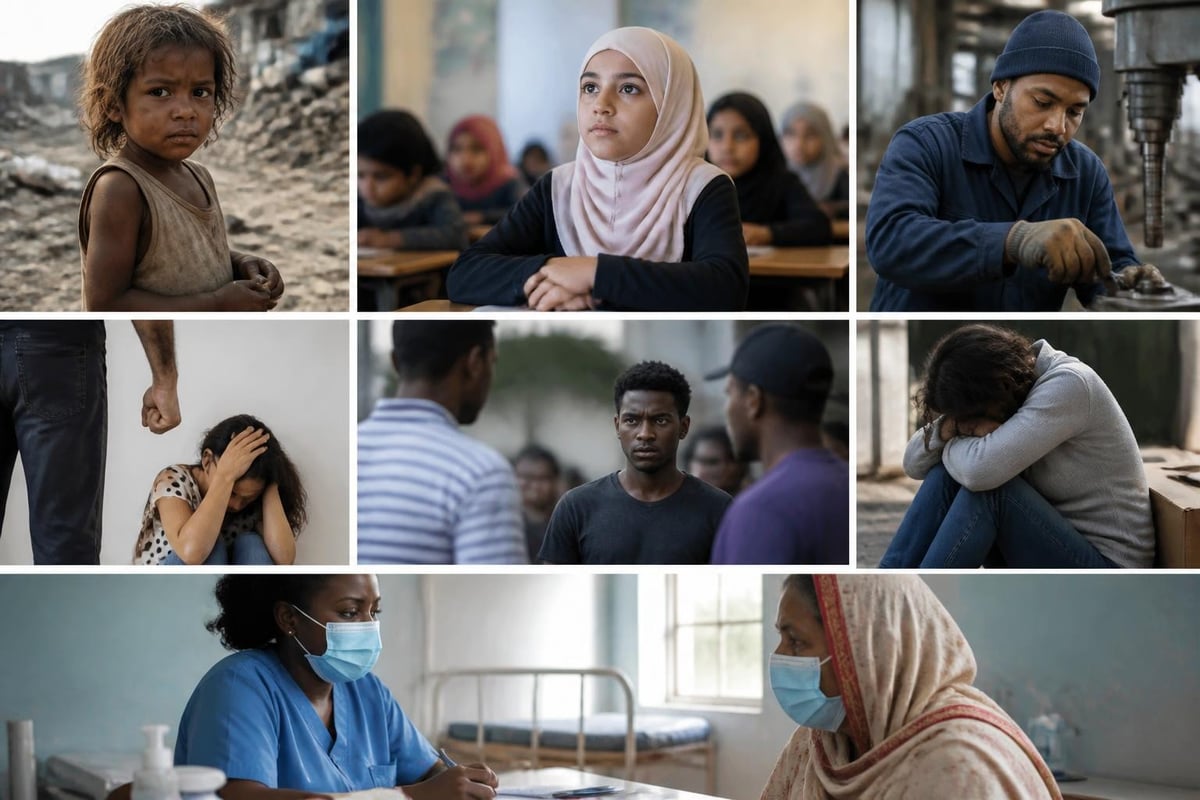
Understanding global mental health requires examining the social, economic, and political factors that shape mental well-being. Poverty, violence, displacement, discrimination, and lack of education create conditions where mental health problems flourish while simultaneously restricting access to care.
Recent findings in global mental health research emphasize how socioeconomic determinants fundamentally influence both mental health outcomes and service delivery. A person facing food insecurity, housing instability, or political persecution experiences mental health challenges amplified by their circumstances.
The Role of Trauma and Displacement
Forced migration and refugee experiences create unique mental health challenges that require specialized understanding. Individuals fleeing violence, persecution, or natural disasters carry trauma that intersects with the stress of displacement, cultural adjustment, and uncertainty about the future.
Working with these populations demands trauma-informed approaches that recognize how past experiences shape current mental states. It also requires advocacy for policies that address the root causes of displacement and protect vulnerable populations.
Building Sustainable Mental Health Systems
Creating lasting change in global mental health requires more than individual clinical interventions. It demands systematic approaches to building mental health infrastructure, training workforces, and integrating mental health into primary care settings.
The task force approach has shown promise in many regions. This model involves training non-specialist healthcare workers to identify and manage common mental health conditions, reserving specialist care for complex cases. This pyramid structure maximizes limited resources while expanding service reach.
Task-Shifting and Workforce Development
Effective task-shifting programs include these components:
- Structured training curricula for primary care providers
- Clear protocols for assessment, treatment, and referral
- Regular supervision and consultation with mental health specialists
- Integration with existing health infrastructure
- Community education to reduce stigma and increase help-seeking
The testimonials from individuals who have accessed culturally responsive mental health services underscore the importance of having trained professionals who understand both clinical best practices and cultural contexts.
Technology and Innovation in Service Delivery
Digital health solutions offer unprecedented opportunities to expand mental health service access. Teletherapy, mobile mental health applications, and online support communities can reach individuals in remote areas or regions with limited mental health infrastructure.
However, technology implementation must account for digital literacy, internet access, language barriers, and cultural appropriateness. A mental health app designed for urban professionals in high-income countries may be completely unsuitable for rural communities in low-resource settings.
| Technology Solution | Benefits | Implementation Challenges |
|---|---|---|
| Teletherapy platforms | Overcomes distance, increases access | Requires reliable internet, privacy concerns |
| Mobile health apps | Self-paced support, scalable | Digital literacy, cultural relevance |
| SMS-based interventions | Wide reach, low technology requirements | Limited interaction depth |
| Online peer support | Community connection, reduced isolation | Moderation needs, quality control |
The most successful technology interventions combine digital tools with human connection, using technology to enhance rather than replace therapeutic relationships.
Integrating Mental Health and Primary Care
One of the most effective strategies for improving global mental health involves integrating psychological services into primary healthcare settings. This integration normalizes mental health treatment, reduces stigma, and makes services more accessible to people already seeking medical care.

Healthcare providers in primary settings can be trained to screen for common mental health conditions, provide brief interventions, and refer complex cases to specialists. This collaborative care model has demonstrated effectiveness across diverse cultural contexts and resource levels.
Training Primary Care Providers
The National Institute of Mental Health research supports training programs that equip primary care physicians, nurses, and community health workers with fundamental mental health competencies. These programs typically cover:
- Recognition of common mental health symptoms
- Basic counseling techniques
- Psychopharmacology fundamentals for primary care
- When and how to refer to specialized services
- Self-care practices to prevent provider burnout
Training must be ongoing rather than one-time, with continuous professional development ensuring providers stay current with best practices.
Policy Advocacy and Human Rights
Mental health is increasingly recognized as a human rights issue. International frameworks now acknowledge that access to mental health care represents a fundamental right, not a privilege reserved for those with resources.
Advocacy efforts focus on several key areas: increasing government funding for mental health services, implementing mental health legislation that protects patient rights, reducing coercive practices in psychiatric care, and ensuring mental health integration into universal health coverage schemes.
Critical policy priorities include:
- Allocating minimum percentages of health budgets to mental health
- Protecting the rights of individuals with psychosocial disabilities
- Eliminating discriminatory laws and practices
- Ensuring community-based services rather than institutional care
- Including mental health in emergency preparedness plans
Practitioners play a vital advocacy role by documenting unmet needs, sharing clinical evidence with policymakers, and elevating the voices of those with lived experience.
Training the Next Generation
Developing a globally competent mental health workforce requires transforming how we educate future practitioners. Traditional training programs often emphasize Western diagnostic systems and treatment approaches without adequate attention to cultural adaptation or resource-limited settings.
The team members working in global mental health contexts benefit from training that combines clinical expertise with cultural humility, public health perspectives, and systems-thinking skills. This multidisciplinary approach prepares professionals to work effectively across diverse settings.
Core Competencies for Global Practice
Essential competencies for practitioners in global mental health:
- Cultural humility: Ongoing self-reflection about one's own cultural assumptions and biases
- Adaptability: Flexibility in applying clinical knowledge to varied contexts
- Systems awareness: Understanding how social, economic, and political factors influence mental health
- Collaborative practice: Working effectively with traditional healers, community leaders, and non-specialist providers
- Research literacy: Critically evaluating and applying global mental health evidence
These competencies extend beyond clinical skills to encompass advocacy, program development, and community engagement.
Measuring Progress and Impact
Evaluating global mental health initiatives requires appropriate metrics that go beyond traditional clinical outcomes. While symptom reduction matters, equally important measures include service accessibility, cultural acceptability, cost-effectiveness, and sustainability.
Many programs fail not because interventions lack efficacy but because implementation strategies don't account for local contexts. Measurement frameworks must capture both process indicators (how services are delivered) and outcome indicators (what results are achieved).
| Evaluation Domain | Sample Metrics | Why It Matters |
|---|---|---|
| Access | Percentage of population within 2 hours of services | Proximity determines whether services can be utilized |
| Quality | Fidelity to evidence-based protocols | Ensures interventions maintain therapeutic effectiveness |
| Acceptability | Service utilization rates by target populations | Cultural appropriateness drives engagement |
| Equity | Service distribution across demographic groups | Identifies whether vulnerable populations are reached |
| Sustainability | Local funding and workforce retention | Determines whether programs continue beyond initial implementation |
The most valuable evaluations involve community stakeholders in defining success and interpreting findings.
Addressing Substance Use and Co-Occurring Disorders
Global mental health work frequently intersects with addiction recovery, as substance use disorders affect millions worldwide and commonly co-occur with other mental health conditions. Cultural attitudes toward substance use vary dramatically, influencing treatment approaches and recovery pathways.
Some cultures view addiction primarily as a moral failing, while others recognize it as a health condition requiring medical intervention. Effective programs acknowledge these perspectives while promoting evidence-based treatments. The integration of mental health and substance use services represents best practice, addressing the whole person rather than separating artificially connected conditions.
Recovery-oriented approaches that emphasize hope, empowerment, and community integration have shown cross-cultural applicability. These models recognize that pathways to recovery are diverse and must align with individual values and cultural contexts.
The Role of Community Engagement
Sustainable improvements in global mental health cannot be imposed from outside. They require genuine partnership with communities, incorporating local wisdom and leadership throughout the process.
Community engagement begins with listening. Before implementing any program, practitioners must understand how communities conceptualize mental health, what resources already exist, what barriers prevent help-seeking, and what solutions community members envision.
Effective community engagement strategies:
- Conducting participatory needs assessments with diverse community representatives
- Training community health workers from within target populations
- Partnering with trusted community institutions (schools, faith organizations, community centers)
- Creating advisory boards with community leadership
- Ensuring feedback mechanisms allow continuous program refinement
- Celebrating local healers and traditional practices alongside clinical interventions
The client experiences demonstrate how culturally grounded approaches yield better engagement and outcomes than one-size-fits-all programs.
Moving Forward With Global Mental Health
The field of global mental health continues evolving as practitioners, researchers, and advocates learn from implementation experiences worldwide. Success requires balancing universal principles of effective mental health care with local adaptation, respecting cultural diversity while maintaining therapeutic integrity.
Future progress depends on sustained political commitment, adequate funding, workforce development, community partnerships, and ongoing research into what works in different contexts. The challenge is immense, but so is the opportunity to transform millions of lives.
Practitioners working in this space must maintain both clinical excellence and cultural humility, recognizing that expertise in one context doesn't automatically translate to another. The most effective global mental health work happens when international collaboration meets local leadership, when evidence-based practice embraces cultural wisdom, and when human rights principles guide all interventions.
Addressing the global mental health crisis requires both clinical expertise and cultural competence, combining evidence-based practices with deep respect for diverse communities and contexts. Whether you're seeking mental health support that honors your cultural background or looking to expand your understanding of international mental health approaches, working with a practitioner who bridges these worlds makes all the difference. With over 15 years of experience spanning forensic psychology, addiction recovery, and cultural engagement across the U.S. and Latin America, Henry Montero provides the expertise and cultural sensitivity needed to navigate complex mental health challenges in our interconnected world.